Pearl Sydenstricker Buck and her alma mater
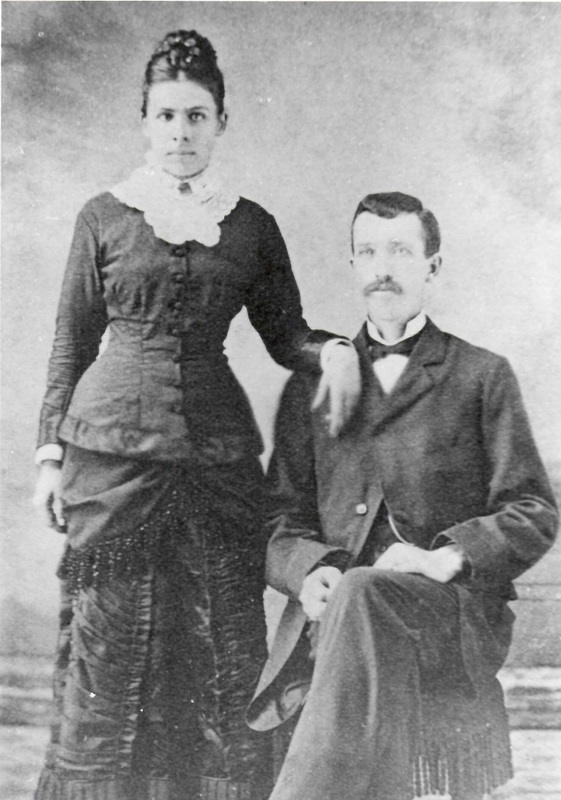
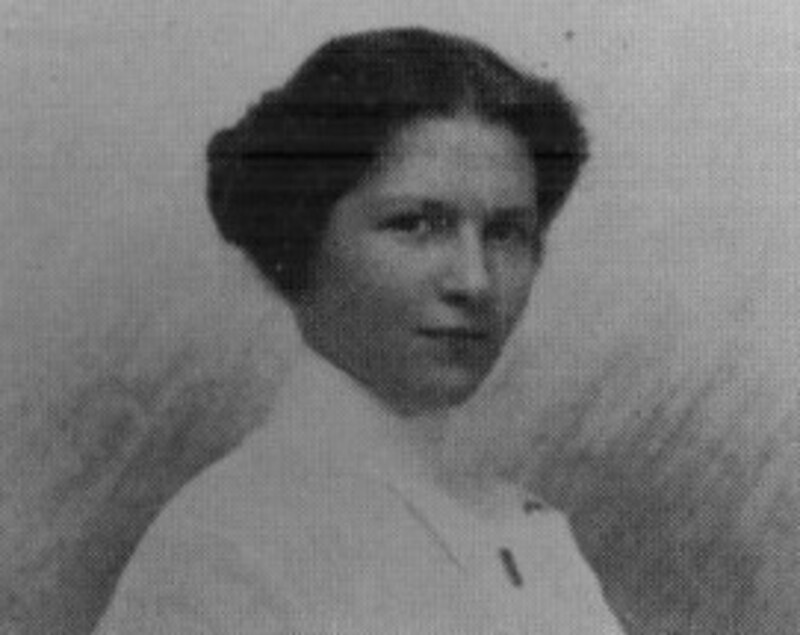
Pearl Sydenstricker Buck was born in Hillsboro, West Virginia, on June 26, 1892, to Presbyterian missionary parents. Her family returned to China when she was an infant, and she spent her early years in the city of Zhenjiang. Buck received her early education from her mother and a Chinese Confucian scholar, later attending missionary schools and a high school in Shanghai.
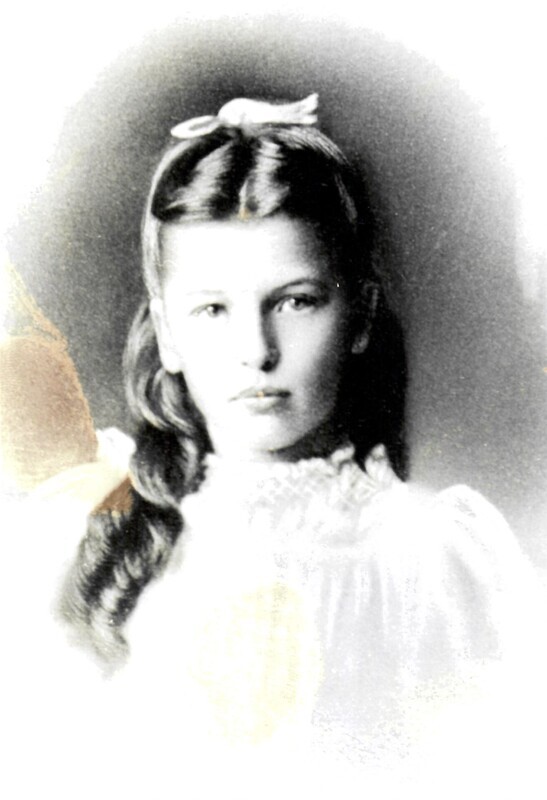
Pearl enrolled at Randolph-Macon Woman’s College in 1910, and felt like she entered a different world. Pearl’s lack of understanding of American culture made adapting to her new life very difficult. Similarly, the college’s other students did not understand her differences or show interest in Chinese culture, outside of the classroom. Rather than succumb to her loneliness, Pearl realized she would need to learn more about the new culture she lived in and become involved with campus life.
Fortunately, she soon met Emma Edmunds who would become a lifelong friend. Emma recalled their initial meeting at R-MWC:
“I remember my first day at college…the girls all seemed at home and so sophisticated, and I felt so countrified. Then I saw this one girl and she looked even more countrified than me. Her dress was made of Chinese grass linen and nobody else had anything like that…Pearl looked terribly different. I felt sorry for her, somehow, I knew how she felt, and so I dared speak to her. That’s how we met.” (Stirling, 24)
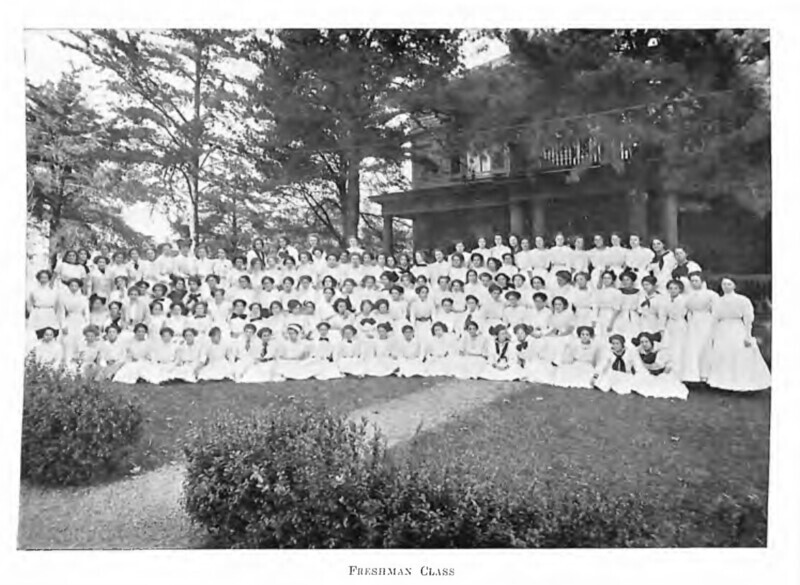
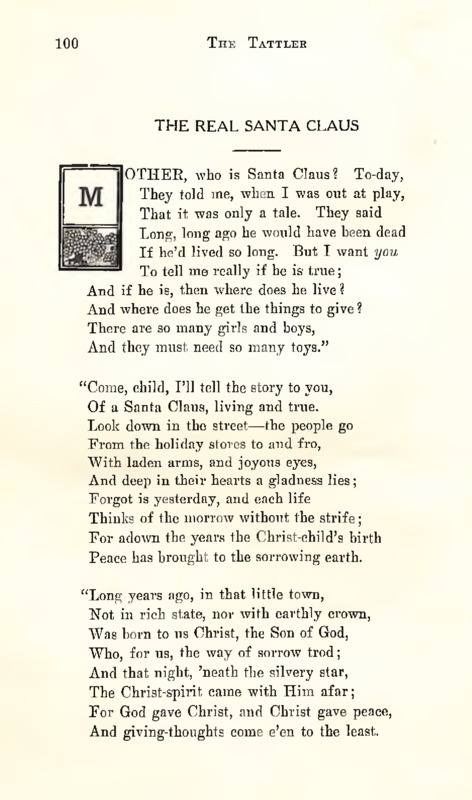
While Emma entered a sorority, Pearl joined the Franklin Literary Society, a society which conducted dramatic readings and encouraged writing competitions. Thus began Pearl’s writing career. During her freshman year, she published her first story titled “The Real Santa Claus” in the college’s literary magazine, The Tattler.
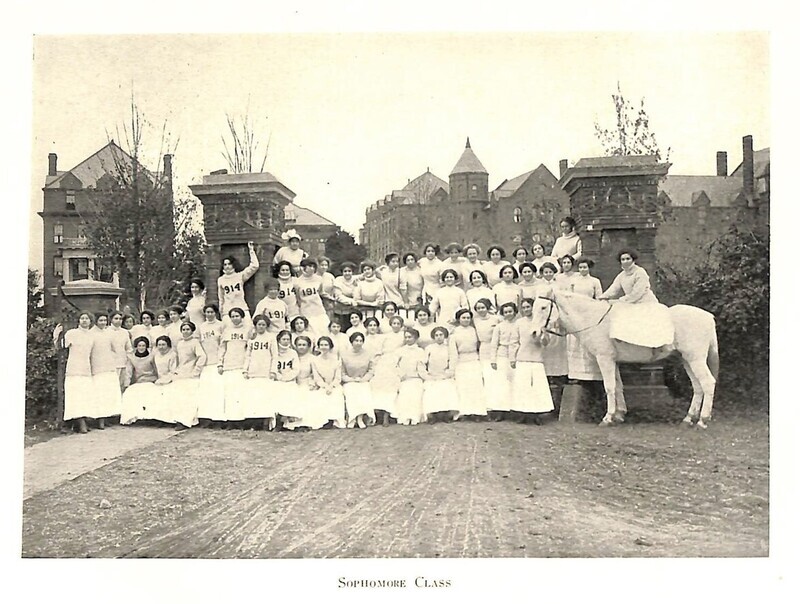
A philosophy major, Pearl continued writing poetry, short stories, and essays for both The Tattler and the R-MWC yearbook, The Helianthus. She began displaying her Even spirit by playing pranks on the Odds with her friends, and was elected the sophomore class treasurer.
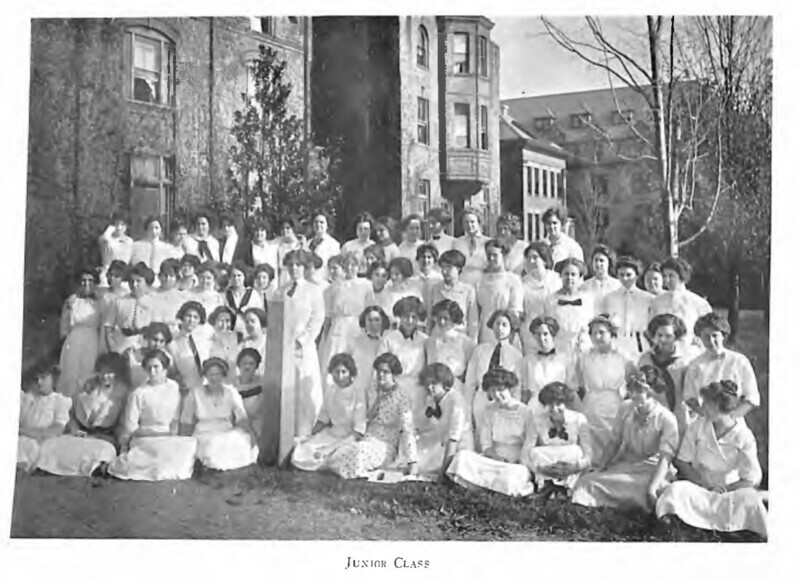
By her junior year, Pearl felt fully integrated into her American college experience, and was elected president of the junior class, was chair of the college’s YMCA chapter, and was selected to become a member of the Am Sams, the college’s friendship secret society.
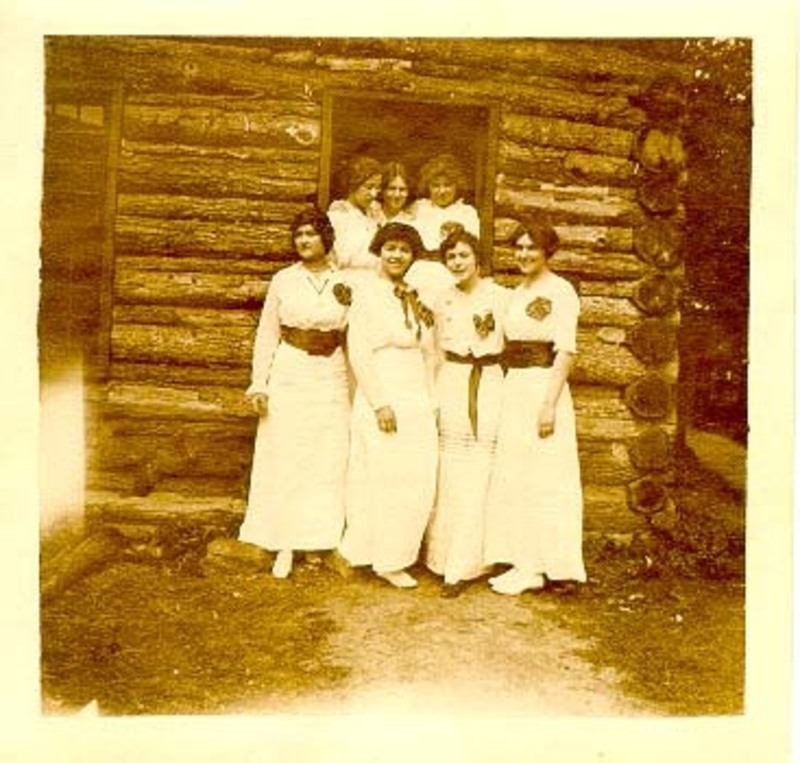
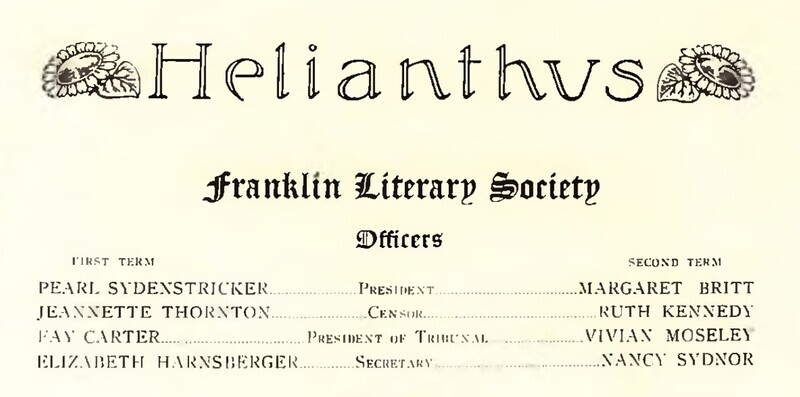
By now, she had developed an active campus life, and was chosen to become the editor of The Tattler, a position she greatly desired. However, due to family obligations, Pearl moved off campus to assist with caring for her brother’s children. Juggling these family and academic demands, Pearl had to surrender her editorship and was ineligible to become the student body president during her senior year.
While disappointed, Pearl actively pursued her academic endeavors, especially her writing. Her writings during her senior year consisted of several stories and poems she wrote for The Tattler including “The Hours of Worship,” “A Chinese Nursery Rhyme,” “An Eastern Lullaby,” and “Song of the Sun,” many of which were a constant reminder of her religous and Chinese cultural upbringing.
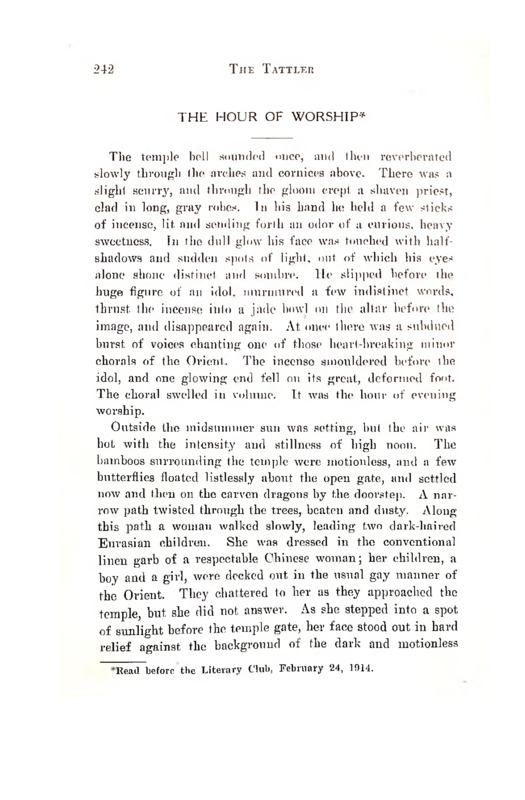
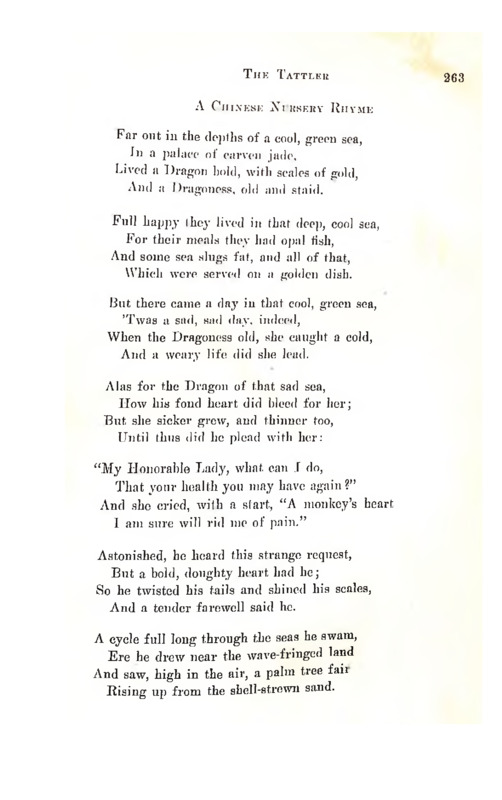
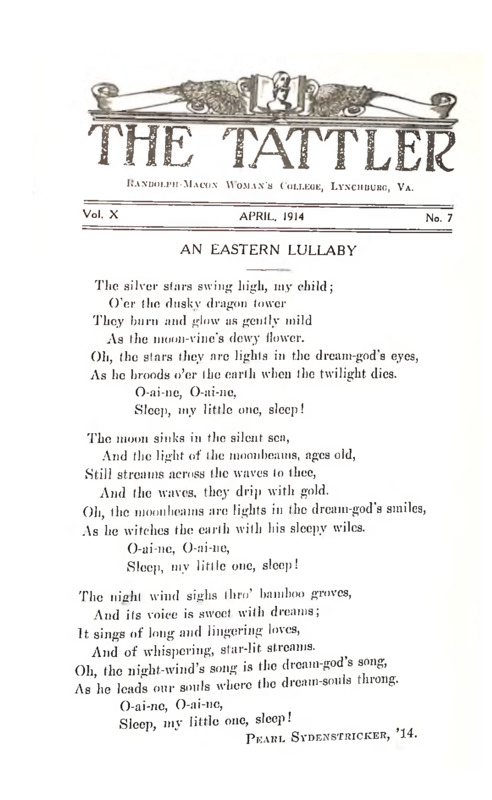
While Pearl accomplished much during her years at R-MWC, this was not the happiest period of her life and she continued to live in two different worlds. Even her graduation proved to be a disappointment.
“So I came to the end of college and took my place in the long procession of graduates. I received my diploma, lonely to know that my parents were not in the chapel crowded with other parents, although by then I was used to loneliness of that sort… My attempt, successful enough in its own way, to be like other American girls, was not permanent, I fear, and after my graduation I was faced with my two worlds again” (My Several Worlds, 96).
After graduation, Pearl was offered a teaching assistant position at the college, but returned to China within a few months after receiving news of her mother’s illness. It was not until later in life that Pearl appreciated her years at the school. She continued her friendship with Emma Edmunds, and returned on several occasions to the college.
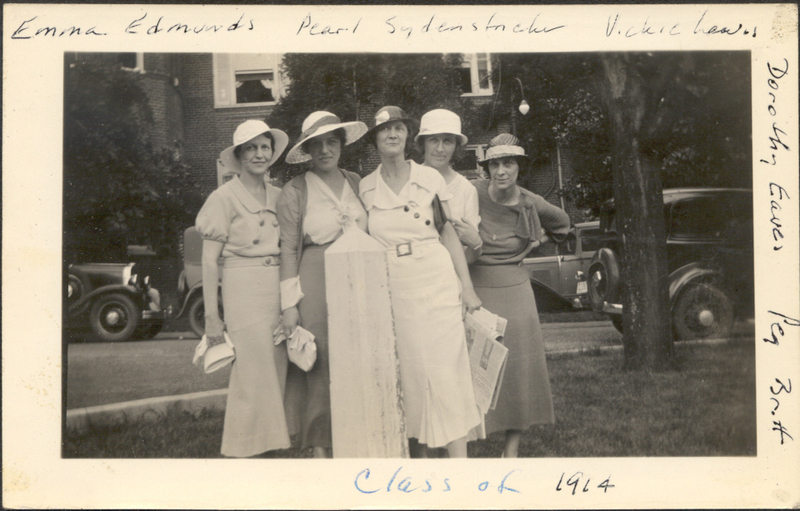
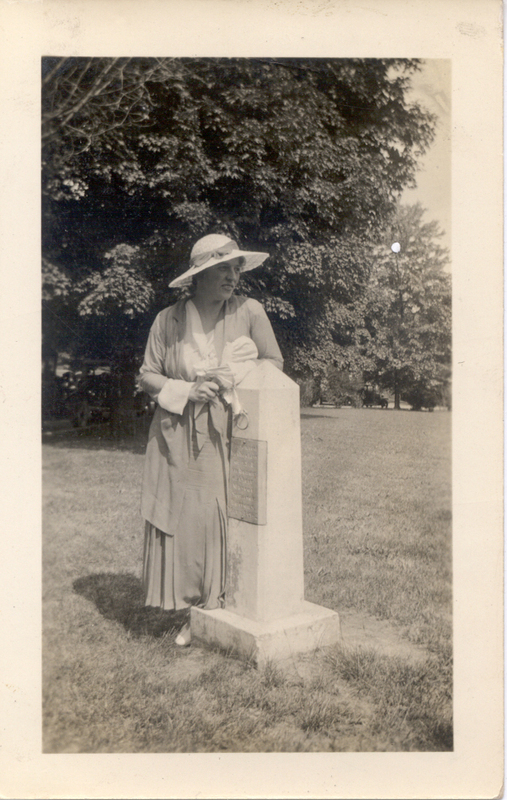
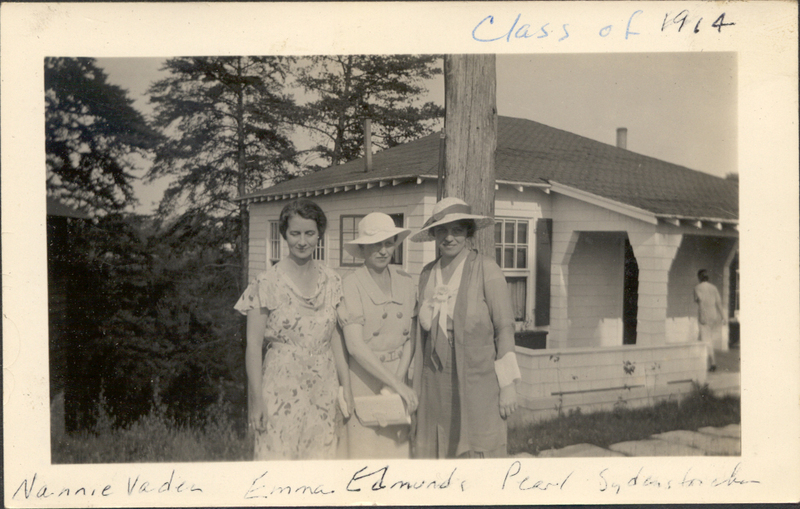
In 1935, she wrote a plea to the alumnae for their support in creating a rare book room at the college, which was established shortly after her article in the Alumnae Bulletin was published. In 1939 she was elected to the Phi Beta Kappa Chapter established at R-MWC in 1917, three years following her graduation.
In 1964, President William Quillian invited Pear back to campus to give the 1964 commencement address, to mark the fiftieth anniversary of her graduation. This was her last campus visit.
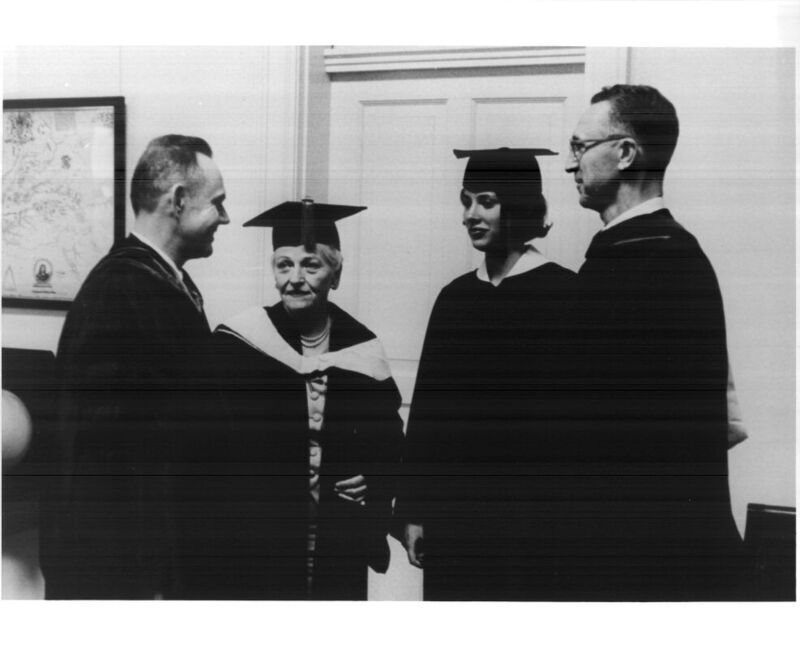
“The whole purpose of education is first to prepare you with essential knowledge for the next stage in your life and then to persuade, coerce and convince you to use that knowledge in the hope that you will not, because of ignorance, be a destructive force to yourself and to others. Of course you will forget details and facts, but all these years of learning in the areas of human knowledge will compel you nevertheless to remember at least where essential knowledge is to be found, or even re-discovered when you need it.”
–Pearl S. Buck, 1964 Commencement Address
Works Cited
Buck, Pearl S. “You and Your Miracle,” ts. Commencement address, Randolph-Macon Woman’s College, Lynchburg, June 7, 1964.
Buck, Pearl S. “Dear Randolph-Macon Girls.” Helianthus. Lynchburg: Randolph-Macon Woman’s College, 1932. 10-11.
Buck, Pearl S. “Message to Randolph-Macon.” Alumnae Bulletin Sept. 1943: 15-16.
Buck, Pearl S. My Several Worlds, a Personal Record. New York: John Day, 1954.
Buck, Pearl S. “Pearl S. Buck’s Message to New York Chapter.” Alumnae Bulletin April 1935: 16-17.
Stirling, Nora. Pearl Buck, a Woman in Conflict. Piscataway: New Century, 1983.